


Dark circles under the eyes are a common skin concern. They can make your face look tired even when you have had enough sleep. Many people try eye creams, home remedies, or extra sleep, but the dark appearance does not always improve.
This is because dark circles are not always caused by lack of sleep. Genetics, pigmentation, allergies, ageing, thin skin, and under-eye hollows can also play a role.
The good news is that some types of dark circles can be improved with the right skincare, lifestyle changes, or professional treatment.
If you are looking for dark circle treatment in Thane, understanding the underlying cause is the first step. At Dermatrix Clinic, under-eye concerns can be assessed to help determine a suitable treatment approach.
In this guide, we explain what causes dark circles, the different types, available treatment options, and simple ways to care for the delicate skin around your eyes.
What Are Dark Circles Under the Eyes?
Dark circles are areas of discoloration or shadowing beneath the lower eyelids. Depending on your skin tone and the underlying cause, they may appear brown, blue, purple, grey, or almost black.
Some people naturally have darker skin around their eyes, while others develop dark circles over time.
The skin around the eyes is thinner and more delicate than many other areas of the face. This makes pigmentation, visible blood vessels, puffiness, and changes in facial structure more noticeable.
Although dark circles are usually harmless, understanding why they appear can help you choose an appropriate treatment.
What Causes Dark Circles Under the Eyes?
Several factors can contribute to under-eye darkness. Sometimes, more than one cause is present.
1. Genetics and Family History
Some people develop dark circles at a young age because they have inherited a tendency towards under-eye pigmentation, thin skin, or deeper tear troughs.
If dark circles run in your family, regular eye creams may not completely remove them.
2. Lack of Sleep and Fatigue
Poor sleep can make existing dark circles appear more noticeable.
When you are tired, changes in skin appearance and under-eye puffiness can increase the visibility of shadows and blood vessels.
However, sleeping longer may not help if your dark circles are primarily caused by pigmentation or facial structure.
3. Under-Eye Pigmentation
Excess melanin can cause brown or greyish discoloration beneath the eyes.
Common contributing factors include sun exposure, skin inflammation, allergies, and frequent rubbing of the eyes.
People with Indian and other darker skin tones may be particularly prone to certain forms of pigmentation.
4. Ageing and Thin Skin
As we age, the skin gradually loses collagen and elasticity. The under-eye area may become thinner, making the blood vessels underneath more visible.
Changes in facial fat and skin structure can also increase shadowing.
5. Allergies and Frequent Eye Rubbing
Allergies may cause itching, swelling, and irritation around the eyes.
Frequent rubbing can worsen inflammation and lead to pigmentation. Nasal allergies can also contribute to a darker appearance beneath the eyes.
Managing the allergy may help reduce these changes.
6. Sun Exposure
Sun exposure can stimulate melanin production and make existing under-eye pigmentation more visible.
Using suitable sunscreen, sunglasses, and other protective measures can help prevent further darkening.
7. Dehydration and Lifestyle Factors
Dehydration can make the under-eye area appear dull or sunken. Stress, smoking, and other lifestyle factors may also make existing dark circles more noticeable.
Improving these habits can support healthier-looking skin, although it may not completely correct genetic or structural dark circles.
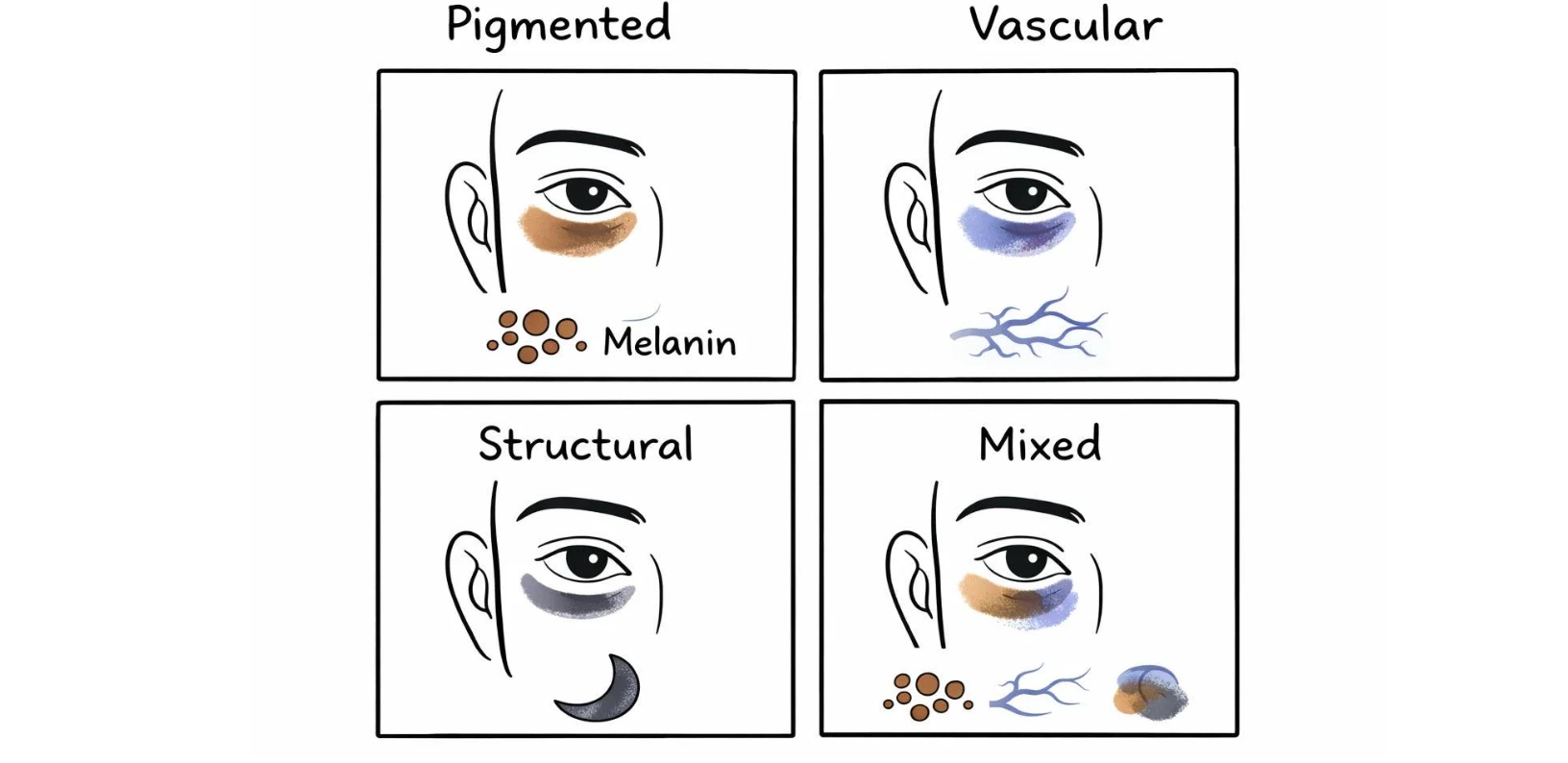
Understanding the Different Types of Dark Circles
Not all dark circles look the same. Dermatologists assess their appearance and underlying causes before recommending treatment.
Pigmented Dark Circles
These usually appear brown and are associated with increased melanin in the under-eye skin.
They may be linked to genetics, sun exposure, allergies, or previous inflammation.
Vascular Dark Circles
These can appear bluish or purplish because blood vessels are more visible through thin skin.
Skin thickness, ageing, and genetics may contribute to their appearance.
Structural Dark Circles
These occur when the shape of the under-eye area creates shadows.
Under-eye hollows, tear troughs, and age-related volume loss can make the area look darker even without significant pigmentation.
Mixed Dark Circles
Many people have a combination of pigmentation, visible blood vessels, and hollowing.
Mixed dark circles may require more than one treatment approach.
Why does identifying the type matter? A pigmentation treatment may not correct hollowing, while a treatment designed to improve volume may not remove brown discoloration. Understanding the cause helps avoid unnecessary procedures.
How to Remove Dark Circles Under the Eyes
The most suitable approach depends on the type of dark circles, skin sensitivity, medical history, and the results you want to achieve.
Some people benefit from simple skincare changes, while others may need professional treatment.
1. Dermatologist-Recommended Under-Eye Skincare
Certain topical ingredients, such as vitamin C and other suitable pigmentation-targeting formulations, may help improve some forms of under-eye discoloration.
A dermatologist can recommend products based on your skin type and sensitivity.
Avoid applying strong bleaching creams, exfoliating acids, or prescription ingredients close to the eyes without medical guidance.
2. Specialised Under-Eye Chemical Peels
Carefully selected chemical peels may help improve certain types of superficial under-eye pigmentation.
Unlike ordinary facial peels, procedures around the eyes require particular care because the skin is delicate.
Dermatrix offers an EyeRevive Peel, a treatment developed for concerns around the eye contour, including pigmentation and uneven-looking skin.
Learn more about EyeRevive Peel Treatment.
A dermatologist should assess suitability before recommending a peel.
3. Laser-Based Treatments
Selected laser procedures may help address certain forms of pigmentation or other under-eye concerns.
However, laser treatment is not suitable for every type of dark circle.
The delicate eye area requires specialist assessment, appropriate eye protection, and careful treatment settings. People with deeper skin tones may be more susceptible to post-inflammatory pigmentation following unsuitable procedures.
4. Under-Eye Fillers for Hollowing
For selected patients, under-eye fillers may improve shadows caused by tear trough hollows or volume loss.
Fillers do not directly treat every type of pigmentation and are not suitable for everyone.
The procedure has important risks, including swelling, unevenness, vascular complications, and, rarely, serious eye injury. It should only be considered after an appropriate medical assessment by a suitably qualified clinician.
5. Treating Allergies and Skin Irritation
If allergies, eczema, or frequent rubbing contribute to dark circles, treating the underlying condition may be an important part of the plan.
In these cases, cosmetic procedures alone may not address the cause.
6. Combining Treatment with Daily Skincare
Some people have more than one type of dark circle. A personalised plan may combine medical skincare, suitable procedures, sun protection, and lifestyle improvements.
For anyone exploring dark circle treatment at Dermatrix, a consultation can help identify which options may be appropriate.
Can You Reduce Dark Circles Naturally at Home?
Home remedies may help reduce temporary puffiness or improve the appearance of tired eyes. However, they cannot reliably remove genetic pigmentation or correct structural hollows.
Here are some useful daily habits.
Maintain a regular sleep schedule. Aim for around seven to nine hours of sleep each night if you are an adult, according to your individual needs.
Use a cool compress. A clean, cool compress may temporarily reduce puffiness and make visible vessels less noticeable.
Protect your under-eye area from sunlight. Use a suitable broad-spectrum SPF 30 or higher sunscreen, sunglasses, and sun-protective habits.
Avoid rubbing your eyes. If itching or irritation persists, seek medical advice instead of repeatedly rubbing the skin.
Keep your skin moisturised. A gentle, fragrance-free moisturiser can support the skin barrier and reduce dryness.
Manage allergies. Appropriate allergy treatment may help when nasal allergies or eye irritation contribute to darkness.
Avoid applying lemon juice, baking soda, undiluted essential oils, or harsh DIY mixtures near your eyes. These can irritate the skin and may worsen pigmentation.
Dark Circle Creams vs Professional Treatments: Which Is Better?
Both approaches have a role, but they are used for different concerns.
| Concern | Skincare or Home Care | Professional Assessment or Treatment |
|---|---|---|
| Mild dryness or temporary tired appearance | Often helpful | Not always required |
| Superficial pigmentation | May gradually help | May be considered if persistent |
| Allergy-related dark circles | Managing allergies is important | Medical evaluation may be needed |
| Under-eye hollows | Creams cannot restore lost volume | Structural options may be assessed |
| Mixed or stubborn dark circles | May provide partial improvement | Helps identify multiple contributing causes |
Professional treatment is not automatically better for everyone. The aim is to choose the least invasive, appropriate option for the underlying concern.
Benefits of Professional Dark Circle Treatment
Depending on the cause and the treatment selected, professional care may offer several benefits.
More Targeted Treatment
A dermatologist can distinguish pigmentation from vascular or structural shadows and recommend an approach suited to the specific concern.
Improvement in Under-Eye Appearance
Appropriate treatment may help reduce discoloration or shadowing, making the under-eye area appear more even and refreshed.
A Personalised Skincare Plan
A consultation can help identify products, sun protection habits, and other measures appropriate for your skin.
Better Understanding of Expected Results
A dermatologist can explain the possible improvement, number of sessions, aftercare, limitations, and relevant risks.
Long-Term Maintenance Guidance
Some contributing factors, such as sun exposure and allergies, can continue over time. Ongoing care may help maintain improvement.
Results vary, and no treatment can guarantee complete or permanent removal of dark circles.
How Long Does It Take to See Results?
There is no fixed timeline for dark circle improvement.
Temporary puffiness may improve relatively quickly with rest and suitable home care. Pigmentation-related changes generally take longer and may require consistent skincare or a series of treatments.
Structural dark circles may require a different approach altogether.
The expected timeline depends on:
-
The underlying cause of the dark circles
-
Whether the concern is superficial or deeper
-
Your skin type and sensitivity
-
The selected treatment
-
Your response to treatment and aftercare
A dermatologist can provide a more realistic estimate after examining your under-eye area.
Is Dark Circle Removal Permanent?
Not always.
Some types of pigmentation can improve significantly, but genetics, ageing, allergies, and continued sun exposure may affect long-term results.
Similarly, under-eye hollows may change over time as facial tissues age.
Maintenance skincare or follow-up treatments may be appropriate for some patients. Complete removal is not always achievable.
When Should You See a Dermatologist for Dark Circles?
Consider seeking professional advice if:
-
Dark circles remain persistent despite regular sleep and skincare.
-
Pigmentation appears to be increasing.
-
You experience itching, redness, or irritation around your eyes.
-
You are unsure whether the darkness is caused by pigmentation or hollowing.
-
You want to explore professional treatment safely.
If darkness or swelling appears suddenly, affects mainly one eye, or is accompanied by pain or vision changes, seek prompt medical evaluation rather than treating it as a cosmetic concern.
Dark Circle Treatment in Thane at Dermatrix Clinic
If under-eye darkness continues despite skincare and lifestyle changes, a professional consultation may help you understand the cause.
At Dermatrix Clinic, the approach to dark circle treatment focuses on understanding individual under-eye concerns before discussing suitable options.
Depending on the assessment, care may include specialised skincare, EyeRevive Peel, or other appropriate treatment recommendations.
Dermatrix has clinic locations in Thane, including Manpada, Panch Pakhadi, and Kolshet, making it convenient for patients from Thane West and nearby areas to enquire about consultations.
Explore Dark Circle Treatment at Dermatrix or find your nearest clinic.
Dark circles are common, but they do not always have a simple solution. While lack of sleep can make them more visible, pigmentation, allergies, thin skin, and natural facial structure may also contribute.
The most useful first step is to identify the cause rather than repeatedly trying different eye creams or home remedies.
With appropriate skincare, lifestyle habits, and medical guidance where needed, many people can improve the appearance of their under-eye area.
Looking for dark circle treatment in Thane?
Visit Dermatrix Clinic to learn about available under-eye treatments and enquire about a personalised consultation.
 Contact us
 Book Appointment
