


Hair Transplant Treatment
Hair transplant treatment is a surgical hair restoration procedure designed to move suitable hair follicles from a donor area to areas affected by thinning or baldness.
At Dermatrix, treatment planning begins with an assessment of the scalp, pattern of hair loss, donor availability, existing hair, hairline goals and expected coverage. Rather than following the same treatment plan for every patient, the procedure is planned according to individual hair-loss characteristics and long-term requirements.
If you are looking for location-specific information, explore our Hair Transplant in Thane or Hair Transplant in Jalgaon

What is Hair Transplantation?
Hair transplantation is a surgical hair-restoration procedure in which healthy follicular units are taken from a suitable donor area and placed into selected areas of the scalp where greater coverage is needed. The goal is to create a natural-looking distribution that respects the patient’s existing hair, facial proportions and future hair-loss pattern. Not every type of hair loss is suitable for transplantation, so diagnosis, donor assessment and realistic treatment planning are important before proceeding.
A Personalized Approach to Hair Transplant Treatment
Hair restoration is not only about moving grafts. A well-planned treatment considers donor strength, the area requiring coverage, hairline shape, density expectations, existing hair and long-term progression of hair loss. Dermatrix focuses on an assessment-led treatment journey with clear planning, clinical hygiene and structured follow-up.

4.8

1000 Verified Reviews
Detailed Assessment
Scalp condition, hair-loss pattern, donor area and treatment goals are reviewed before planning.
Donor-First Planning
Graft planning considers available donor hair so that coverage goals remain realistic and responsible.
Natural Hairline Design
Hairline shape, direction and distribution are planned to complement the patient’s facial features and existing hair.
Clinical Safety & Hygiene
Treatment is performed in a clinical setting with attention to hygiene, procedure protocols and patient comfort.
Aftercare & Follow-Up
Patients receive post-procedure guidance and follow-up support to help them understand recovery and expected growth stages.
Is Hair Transplantation Suitable for Every Type of Hair Loss?
-
Pattern Hair Loss
Men and women with selected patterns of progressive thinning may be evaluated for transplantation when donor hair is suitable.
-
Receding Hairline
A receding frontal hairline may be assessed for restoration after considering age, future progression and donor availability.
-
Crown Thinning
Crown restoration may be considered when the donor area and overall graft requirement allow responsible coverage planning.
-
Diffuse Thinning
Diffuse thinning needs careful diagnosis because weak donor density or widespread miniaturization can affect suitability.
-
Medical / Scarring Hair Loss
Alopecia areata, scarring conditions or active scalp disease require appropriate medical assessment before any surgical option is considered.

How Does Hair Transplant Treatment Work?
The exact procedure varies according to the patient and the technique recommended by the treating team. In general, the treatment journey includes the following stages:
1. Consultation & Hair-Loss History
The consultation reviews the pattern and duration of hair loss, previous treatments, medical history, expectations and areas of concern.
2. Scalp & Donor Assessment
The scalp and donor region are examined to understand hair density, follicle quality and whether sufficient donor hair is available.
3. Hairline & Coverage Planning
The treatment area, hairline shape, proposed density and graft distribution are planned according to facial proportions, existing hair and long-term needs.
4. Graft Requirement Planning
The estimated graft requirement is determined from the treatment area, donor capacity and achievable coverage rather than using one fixed graft number for every patient.
5. Hair Transplant Procedure
Suitable follicles are harvested and placed into the planned recipient area using the technique selected after clinical assessment.
6. Aftercare & Growth Monitoring
Post-procedure instructions, scalp care and follow-up are important parts of the treatment journey. Hair growth develops gradually, and results should be assessed over time.
Want to Know If Hair Transplantation Is Suitable for You?
A consultation can help assess your pattern of hair loss, donor area, treatment goals and possible graft requirement. Share your concerns with the Dermatrix team to understand whether hair transplantation or another hair-restoration approach may be appropriate for you.
Hair Transplant FAQs – Your Questions Answered | Dermatrix
Find answers to common hair transplant questions, including suitability, graft requirements, hairline planning, recovery, results, permanence, future hair loss and treatment costs. Explore expert guidance from Dermatrix.
What is a hair transplant?
A hair transplant is a surgical hair-restoration procedure that moves suitable hair follicles from a donor area to thinning or bald areas of the scalp. The treatment is planned according to the patient’s hair-loss pattern, donor availability, hairline goals and expected coverage. A clinical assessment is needed to determine whether transplantation is appropriate.
Who may be a suitable candidate for hair transplantation?
Suitability depends on the cause and pattern of hair loss, the quality and density of the donor area, age, scalp health, existing hair and realistic expectations. People with a stable donor area and selected patterns of permanent hair loss may be considered, while some medical or temporary hair-loss conditions may require other treatment first.
How is the donor area checked before a hair transplant?
The donor area is assessed for hair density, follicle quality, distribution and the amount of hair that can be safely used for restoration. Donor capacity is important because it limits the number of grafts available for the current procedure and any possible future restoration needs.
How is a natural-looking hairline planned?
Hairline planning considers facial proportions, age, existing hair, future hair-loss progression, donor capacity and the direction of natural hair growth. The aim is to create a hairline that looks balanced with the face rather than simply placing the maximum number of grafts at the front.
How many grafts will I need for a hair transplant?
There is no single graft number that suits everyone. Graft requirement depends on the size of the area being treated, donor density, hair characteristics, existing hair, desired coverage and whether the hairline, mid-scalp, crown or multiple areas require restoration. An estimate should be made after scalp and donor assessment.
Is hair transplantation permanent?
Hair transplantation is intended as a long-term hair-restoration option because transplanted follicles are selected from a suitable donor area. However, the patient’s existing non-transplanted hair can continue to thin over time. Long-term planning and management of ongoing hair loss may therefore still be important.
Does a hair transplant stop future hair loss?
No. A hair transplant restores selected areas by moving follicles, but it does not automatically stop progressive thinning of the patient’s existing non-transplanted hair. Your clinician may discuss the likely progression of hair loss and whether additional medical or non-surgical management is appropriate.
Is a hair transplant painful?
Hair transplant procedures are commonly performed with local anaesthesia to reduce discomfort during treatment. Patients may still experience pressure, sensitivity or temporary discomfort during or after the procedure. The experience varies by individual, and the treating team should explain pain control and aftercare before treatment.
What happens after a hair transplant?
After treatment, patients receive instructions for scalp care, washing, sleeping position, activity and follow-up. Temporary redness, crusting or sensitivity can occur during early recovery. The transplanted area changes gradually over the following weeks and months, so follow-up is useful for monitoring recovery and growth.
When will new hair start growing after transplantation?
Hair growth after transplantation is gradual rather than immediate. Transplanted hairs may pass through a shedding phase before new growth becomes visible. Early growth may appear over the following months, while density and maturation can continue to develop for many months. Timelines vary between patients.
Can a receding hairline be treated with hair transplantation?
A receding hairline may be considered for transplantation when the donor area is suitable and the pattern of hair loss has been properly assessed. Planning should consider the patient’s age, facial proportions, existing hair and the possibility of future recession so that the design remains appropriate over time.
Can crown thinning be treated with a hair transplant?
Crown thinning can sometimes be treated with transplantation, but the crown may require a substantial number of grafts because of its surface area and natural spiral pattern. The decision depends on donor capacity, the extent of thinning and whether grafts need to be prioritized for other areas such as the frontal hairline.
Can women undergo hair transplantation?
Selected women may be suitable candidates for hair transplantation, particularly when there is a clearly defined area of permanent hair loss and an adequate donor region. Diffuse thinning can have several causes, so diagnosis is especially important before deciding whether surgical restoration is appropriate.
How long does recovery take after a hair transplant?
Early scalp recovery generally takes place over the first days and weeks, but the exact timeline varies with the procedure, treated area, individual healing and aftercare. Patients should follow the specific instructions provided by their treating team and ask when they can safely resume exercise, work and normal hair-care routines.
How much does a hair transplant cost?
Hair transplant cost depends on factors such as the estimated graft requirement, treatment complexity, donor condition, recipient area and the procedure recommended after assessment. For detailed location-specific pricing information, use the dedicated Dermatrix hair transplant cost page rather than relying on a general service-page estimate.
Why is donor hair assessment important before a hair transplant?
Donor assessment helps determine whether enough suitable hair follicles are available for transplantation. It also helps prevent excessive extraction, protects the donor area and supports long-term treatment planning.
How is a natural hairline designed for transplantation?
Hairline design considers facial proportions, patient age, existing hair growth pattern, donor hair availability and potential future hair loss. The objective is a balanced, natural-looking appearance.
How many hair grafts will I need?
The number of grafts depends on the size of the affected area, existing hair density, desired coverage and donor availability. A medical consultation is required for an individualized estimate.
Can hair transplantation treat crown baldness?
Hair transplantation may be suitable for selected patients with crown baldness. However, the crown may require significant graft resources, making donor assessment and long-term planning particularly important.
Will transplanted hair last permanently?
Hair follicles transplanted from suitable donor areas are often more resistant to pattern hair loss and may provide long-lasting growth. However, results vary, and existing non-transplanted hair can continue thinning over time.
What happens during a hair transplant consultation at Dermatrix?
The consultation may include discussion of hair loss history, examination of the scalp and donor area, evaluation of treatment suitability, possible hairline planning, explanation of expected outcomes and guidance about further treatment options.
How much does a hair transplant cost?
The overall cost of hair transplantation depends on the patient's individual treatment requirements.
Factors influencing the estimate may include:
-
Number of grafts required.
-
Extent of baldness or thinning.
-
Donor hair availability.
-
Hairline and crown coverage requirements.
-
Complexity of the procedure.
-
Applicable medical and aftercare services.
An accurate estimate requires assessment of the scalp, donor area and expected treatment plan.
For location-specific information, see Hair Transplant Cost in Thane or Hair Transplant Cost in Jalgaon.
Hair Transplant Treatment by Location
Dermatrix provides hair and scalp consultations through its clinic locations. For detailed treatment information relevant to a particular location, explore the pages below.
Hair Transplant in Thane
Learn about consultation, scalp assessment, donor planning and hair transplant treatment options for patients seeking Hair Transplant in Thane
Hair Transplant Clinic in Thane
If your search is focused specifically on selecting a clinic, consultation process, treatment planning and clinic-related factors, visit our Hair Transplant Clinic in Thane.
Hair Transplant in Jalgaon
Explore consultation, donor assessment, graft planning and treatment information on our dedicated Hair Transplant in Jalgaon page.
Hair Transplant Clinic in Mumbai
For patients researching hair restoration services in Mumbai, visit our Hair Transplant Clinic in Mumbai page.
Personalized Hair Transplant Planning at Dermatrix
Hair transplantation is not a one-size-fits-all procedure. Every patient has a unique hair loss pattern, scalp condition, donor hair availability and restoration goal.
At Dermatrix, hair restoration consultations focus on understanding these individual factors before recommending an appropriate treatment plan.
A personalized assessment may include:
-
Hair Loss Evaluation: Understanding the pattern, severity and progression of hair thinning or baldness.
-
Scalp Examination: Assessing scalp health and identifying conditions that may affect treatment suitability.
-
Donor Hair Assessment: Examining available donor hair density, quality and distribution.
-
Hairline Planning: Considering facial proportions, age, natural hair direction and future hair loss.
-
Graft Requirement Estimation: Planning the likely number and distribution of grafts based on coverage goals and donor limitations.
-
Long-Term Hair Restoration Planning: Considering how existing hair may change over time and whether additional treatment could be necessary.
The objective is to establish a realistic restoration plan that considers natural appearance, available donor resources and long-term hair health.
Natural Hairline Design for Hair Transplantation
A natural-looking hairline is an important part of successful hair restoration.
Hairline planning requires more than selecting the position where new hair should begin. The medical team must consider facial proportions, age, existing hair growth direction, donor availability and the possibility of continued hair loss.
Important Factors in Hairline Design
1. Facial Proportions
The proposed hairline should complement the patient's facial structure and overall appearance.
2. Age-Appropriate Placement
An overly low hairline may look unnatural as the patient ages, particularly if existing hair continues thinning.
3. Hair Direction and Angle
The direction and angle of transplanted follicles affect how naturally the new hair blends with surrounding hair.
4. Density Distribution
Available grafts should be distributed carefully to balance visible coverage and preservation of donor hair.
5. Future Hair Loss
The treatment plan should account for possible progression of hair loss in non-transplanted areas.
Thoughtful hairline design helps create a balanced appearance while making appropriate use of a limited donor supply.
Why Donor Hair Assessment Matters Before Transplantation
The donor area generally refers to the region at the back and sides of the scalp from which suitable hair follicles may be collected.
Because donor follicles are limited, careful assessment is important before planning transplantation.
The medical team should evaluate donor density, hair thickness, scalp condition, existing scarring and the estimated number of safely available grafts.
Removing too many follicles from a limited donor area can cause visible thinning and may reduce options for future hair restoration.
At Dermatrix, donor assessment forms part of the consultation process to help determine whether transplantation is suitable and what level of coverage may be realistic.
Who May Be a Suitable Candidate for Hair Transplantation?
Hair transplantation may be considered for individuals experiencing certain types of permanent hair loss, provided they have sufficient donor hair and are medically suitable.
Potential candidates may include people with:
-
Male pattern hair loss.
-
Selected cases of female pattern hair loss.
-
Receding frontal hairline.
-
Crown baldness.
-
Stable areas of permanent thinning.
-
Selected hair loss caused by scarring or injury, following specialist assessment.
However, not every type of hair loss requires surgery.
Patients with temporary shedding, active scalp disease, unstable hair loss or insufficient donor hair may need further evaluation or alternative treatment before transplantation is considered.
A medical consultation helps establish whether transplantation is appropriate for the individual.
Why Choose Dermatrix for Hair Restoration Consultation?
Dermatrix provides hair and scalp consultations designed to help patients understand their hair restoration options.
The consultation approach emphasizes:
-
Individual hair loss evaluation.
-
Donor area and scalp assessment.
-
Personalized treatment planning.
-
Natural hairline considerations.
-
Realistic discussion of graft requirements.
-
Guidance regarding treatment suitability.
-
Recovery and follow-up information.
Patients can discuss both surgical restoration and available nonsurgical hair treatment options, depending on their medical needs.
Considering hair transplantation in Thane or Mumbai?
Contact Dermatrix to schedule a hair restoration consultation and learn about your treatment suitability, available options and realistic expectations.
See the Transformation


Hair Transplant
Vinesh P.


Hair Transplant
Ganesh D.


Hair Transplant
Anil M.


Hair Transplant
Avinash N.


Hair Transplant
Deepesh M.


Hair Transplant
Dr. Manohar


Hair Transplant
Dr. Mehul P.


Hair Transplant
Mangesh S.


Hair Transplant
Mangesh S.


Hair Transplant
Manohar D.


Hair Transplant
Ashok K.


Hair Transplant
Sagar G.


Hair Transplant
Shankar P.


Hair Transplant
Sudanshu S.


Hair Transplant
Surendar V.


Hair Transplant
--


Hair Transplant
--


Hair Transplant
--


Hair Transplant
--


Hair Transplant
--


Hair Transplant
--


Hair Transplant
--


Hair Transplant
--


Hair Transplant
--


Hair Transplant
--


Hair Transplant
--
Trusted by Thousands. Loved for Results.
97% Client Satisfaction Rate Across Skin, Hair, Body & Dental Care.

4.8
1000 Verified Reviews
-

I did Hair Transplant treatment here. It was a smooth experience start to end. The staff is courteous and doctors are highly skilled. Everything was clearly explained beforehand and the staff took good care at all the stages.
Big thumbs up and highly recommended to everyoneRohit Shirodkar
5.0
-
I had done Hair Transplant from Dermatrix and results were awesome. It was done very professionally and all information was given to me. All staff at Dermatrix clinic were very cooperative and proactive. I strongly suggest to visit for Hair transplant or other services offered. Thank you Dermatrix
MANGESH SHINDE
5.0
-
Clinic is very good ,here I visited for hair transplant ,about doctors they are very cooperative with me, I have done my treatment hair gfc and dandruff treatment is really good amazing 🤩
Sandesh Chauhan
5.0
-
I have done my hair transplant in dermatrix clinic one of my friend recommended i was not sure but literally i have got so good result i am amazed and would recommend you all
Kamlesh Pandey
5.0
-
Very pleased by overall level of professionalism and care. My health issues were treated promptly and efficiently. I would recommend this clinic as thr truly best one
Stanislav Sorokin
5.0
Client Feedback
Discover real stories of hair restoration at Dermatrix; from hairline correction to beard transplants, see the
transformations and techniques that delivered lasting results.
Have questions or ready to book your consultation?
Fill in your details and our team will reach out to you shortly.
Expert Advice for Real Results
Stay informed with expert insights on skin, hair, dental care, and the latest aesthetic innovations.
Discover tips, trends, and treatment guides curated by our in-house specialists.
-
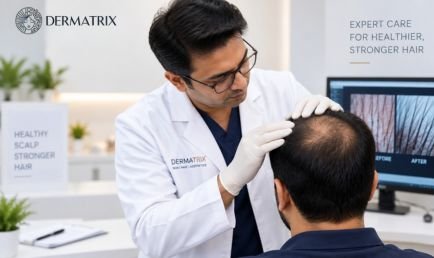
How Can a Hair Specialist at Dermatrix Clinic Help With Hair Fall?
Busting common misconceptions around laser treatments.
Wondering if laser hair removal is permanent or painful? Our experts break down the truths and myths you need to know.
Learn More -
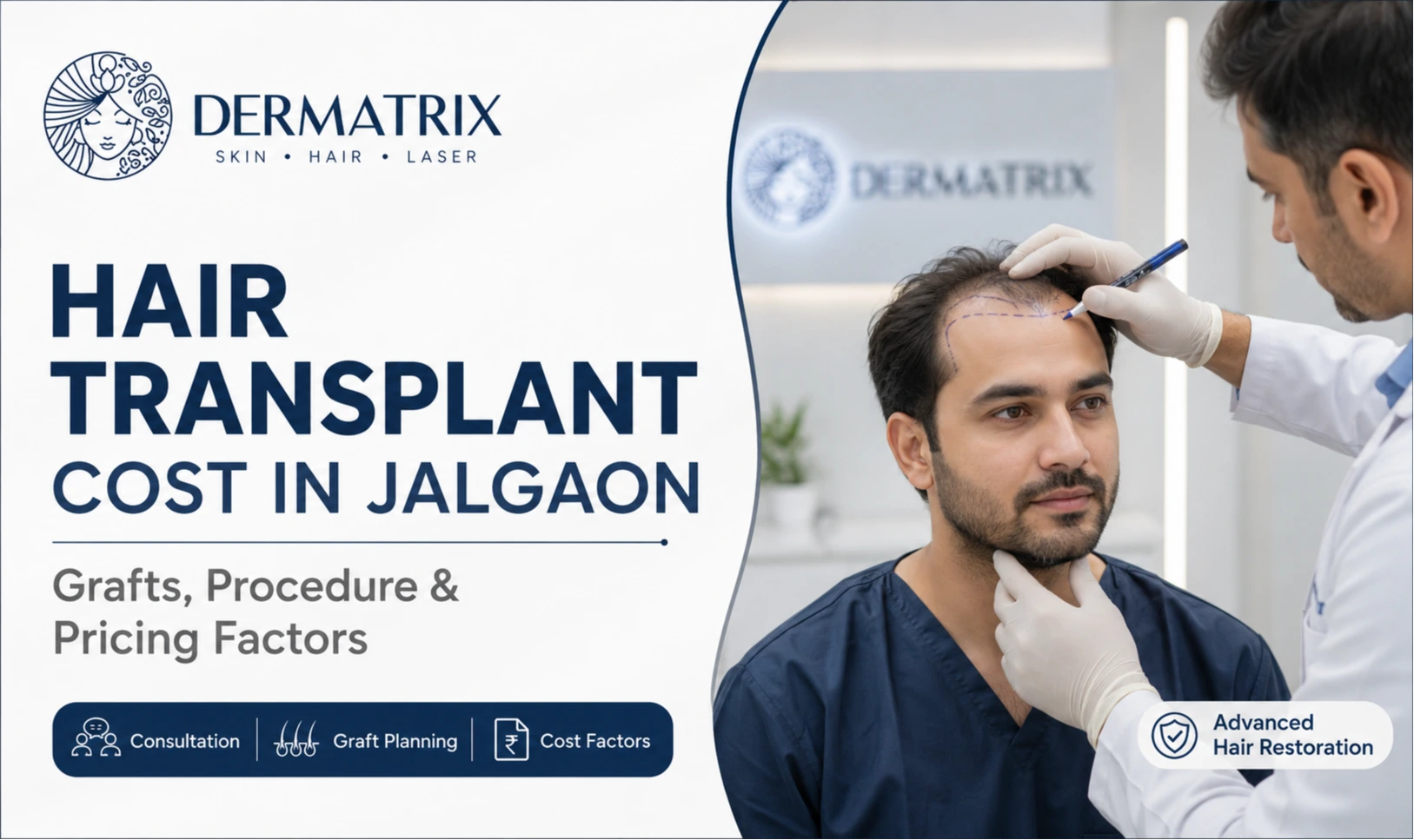
How Is Hair Transplant Cost Calculated in Jalgaon? Grafts, Planning & Procedure Guide
Busting common misconceptions around laser treatments.
Wondering if laser hair removal is permanent or painful? Our experts break down the truths and myths you need to know.
Learn More -

Monsoon Hair Shedding? When to See a Doctor for Hair Loss
Busting common misconceptions around laser treatments.
Wondering if laser hair removal is permanent or painful? Our experts break down the truths and myths you need to know.
Learn More -
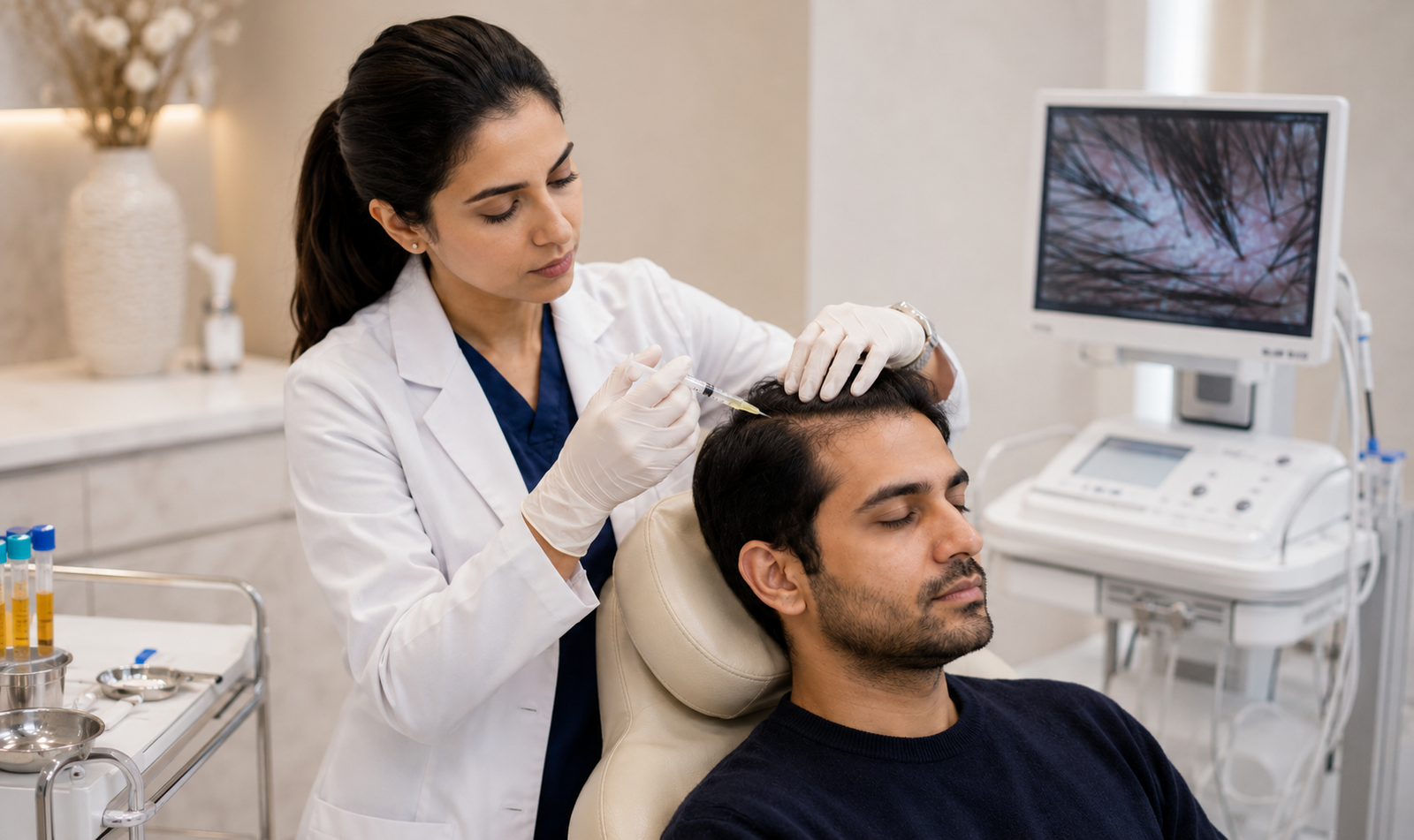
GFC Hair Treatment in Thane: Cost, Benefits, Procedure & Results
Busting common misconceptions around laser treatments.
Wondering if laser hair removal is permanent or painful? Our experts break down the truths and myths you need to know.
Learn More -

PRP for Hair Loss: How It Works, Sessions & Results
Busting common misconceptions around laser treatments.
Wondering if laser hair removal is permanent or painful? Our experts break down the truths and myths you need to know.
Learn More -

Hair Botox Treatment Price
Busting common misconceptions around laser treatments.
Wondering if laser hair removal is permanent or painful? Our experts break down the truths and myths you need to know.
Learn More -

Hair Specialist Doctor in Thane
Busting common misconceptions around laser treatments.
Wondering if laser hair removal is permanent or painful? Our experts break down the truths and myths you need to know.
Learn More -

Laser Comb Therapy: The Truth About Growth Serums
Busting common misconceptions around laser treatments.
Wondering if laser hair removal is permanent or painful? Our experts break down the truths and myths you need to know.
Learn More -

Laser Helmet Therapy: Science-Backed Hair Growth at Home
Busting common misconceptions around laser treatments.
Wondering if laser hair removal is permanent or painful? Our experts break down the truths and myths you need to know.
Learn More -

Stronger, Healthier Hair Starts Here: Advanced Hair Treatments That Work
Busting common misconceptions around laser treatments.
Wondering if laser hair removal is permanent or painful? Our experts break down the truths and myths you need to know.
Learn More
 Contact us
 Book Appointment
