


PRP Hair Treatment
Platelet-Rich Plasma (PRP) hair treatment is a minimally invasive procedure that uses a concentrated platelet-rich fraction prepared from the patient’s own blood and delivers it into selected areas of the scalp. PRP has been studied most extensively in androgenetic alopecia, including male and female pattern hair loss, where some clinical trials and meta-analyses report improvements in hair-density measures in selected patients.
At Dermatrix, PRP should begin with a hair and scalp assessment rather than being offered as a one-size-fits-all solution. The cause of hair loss, stage of thinning, scalp condition, existing follicles, medical history and previous treatment all influence whether PRP is a reasonable option.

What Is PRP Hair Treatment?
PRP stands for Platelet-Rich Plasma. A small amount of the patient’s blood is collected and processed, usually by centrifugation, to separate a plasma fraction with a higher concentration of platelets than whole blood. Platelets contain granules that release multiple signaling proteins and growth factors involved in tissue repair and cellular communication. The prepared PRP is then administered to selected scalp areas using an injection-based clinical protocol. PRP does not create new hair follicles in completely bald skin and should not be described as a guaranteed replacement for medical therapy or hair transplantation. Its role depends on the diagnosis and stage of hair loss.
Why Choose Dermatrix for PRP Hair Treatment?

4.8

1000 Verified Reviews
Diagnosis Before Procedure
PRP should follow a clear hair-loss assessment rather than being offered automatically for every complaint of hair fall.
Defined PRP Protocol
Dermatrix should document the preparation system, centrifugation method and injection protocol used so treatment is consistent and explainable.
Personalized Treatment Planning
Session schedule and combination treatment should reflect the patient’s diagnosis, severity, medical history and goals.
Objective Progress Tracking
Standardized photographs and, where available, trichoscopy or density measurements help assess response more accurately.
Integrated Hair-Loss Care
If PRP is not the best fit, the patient can be directed toward medical treatment, GFC, QR678, Regenera, alopecia-specific care or hair transplantation as appropriate.
Which Hair-Loss Condition Has the Strongest Evidence for PRP?
Androgenetic alopecia has the strongest body of PRP research. Recent systematic reviews and meta-analyses of randomized trials report that PRP can improve hair-density measures compared with placebo or baseline in some patients. However, the studies use different PRP preparation methods, platelet concentrations, activation protocols, injection techniques and treatment schedules, producing substantial heterogeneity.
| Hair-Loss Concern | Evidence Position | Dermatrix Page Positioning |
|---|---|---|
| Androgenetic Alopecia / Pattern Hair Loss | Multiple randomized trials and meta-analyses; results generally favor PRP for hair density, but evidence quality and protocols vary. | Core evidence-based condition to discuss, with realistic expectations. |
| Female Pattern Hair Loss | Included in PRP studies and reviews, though some reviews are male-only and protocols remain inconsistent. | Discuss after evaluating other medical contributors to diffuse thinning. |
| Alopecia Areata | PRP has been studied, but alopecia areata is autoimmune and standard management is diagnosis-specific. | Do not market as a routine standalone PRP indication. |
| Telogen Effluvium | Evidence is much less established than for androgenetic alopecia. | Investigate and address the trigger first; avoid generic PRP-for-shedding claims. |
| Scarring Alopecia / Active Scalp Disease | Different disease mechanisms and risk of permanent follicle damage. | Requires specialist diagnosis; do not treat as ordinary PRP hair thinning. |
How Is PRP Prepared and Administered?
The current Dermatrix page incorrectly describes low-level laser/LED helmet therapy in the “How Does It Work?” section. That content should be removed completely from this PRP service page.
1. Blood Collection
A small amount of the patient’s venous blood is collected using the clinic’s PRP preparation protocol.
2. Centrifugation / Separation
The blood is processed to separate a platelet-rich plasma fraction. The exact centrifugation system, number of spins, anticoagulant and target platelet concentration depend on the PRP protocol.
3. PRP Preparation
The platelet-rich fraction is prepared for administration. Some systems use an activator and others do not; Dermatrix should describe only its verified process.
4. Scalp Administration
PRP is injected into selected thinning areas of the scalp using a controlled clinical technique.
5. Post-Treatment Review
The patient receives aftercare instructions and progress is assessed over the following months using symptoms, photographs and, where available, objective scalp/hair-density measurements.
What Happens During a PRP Hair Treatment Session?
- Hair-Loss Review: The treating clinician confirms the diagnosis, current hair-loss pattern, relevant medical history and treatment plan.
- Scalp Preparation: The scalp is prepared according to clinic protocol. Comfort measures or local numbing may be considered depending on the technique.
- Blood Draw & PRP Processing: Blood is collected and processed using the clinic’s PRP system.
- Scalp Injections: The prepared PRP is injected into planned scalp areas.
- Aftercare: Instructions are provided for scalp care, activity, hair washing and expected temporary local effects.
What Does the Evidence Say About PRP for Hair Loss?
Systematic reviews of randomized and prospective studies generally find that PRP has potential to increase hair density in androgenetic alopecia. A 2024 systematic review including eight randomized trials and one cohort study found significant improvements in hair density in several studies, but concluded that low evidence quality, moderate risk of bias and high heterogeneity limit firm conclusions.
Another 2024 meta-analysis of randomized trials found a pooled increase in hair density but also reported very high heterogeneity, low-quality evidence and publication bias. This is important for patient communication: PRP is a reasonable evidence-informed option for selected pattern hair loss, but there is no single standardized PRP protocol or guaranteed degree of regrowth.
How Many PRP Sessions May Be Needed?
There is no universally standardized PRP schedule for hair loss. Many clinical protocols use an initial series of treatments spaced several weeks apart, followed by reassessment and possible maintenance. The number of sessions varies across studies because PRP preparation, dose, injection method and patient characteristics differ.
Dermatrix should publish its own verified treatment schedule only after confirming the exact protocol used in clinic. Avoid stating that every patient will see improvement after exactly three or four sessions.
When Can PRP Results Be Assessed?
Hair growth occurs slowly, so PRP outcomes should be assessed over months rather than days or immediately after a session. Studies commonly evaluate hair density, count or shaft measures at three to six months and sometimes longer. The visible timeline can differ according to the diagnosis, degree of miniaturization, baseline density, concurrent treatment and biological response.
Use standardized photographs and, when possible, objective scalp assessment to track progress. Do not promise 'natural regrowth,' a fixed density increase or a guaranteed visible result after a set number of treatments.
PRP vs GFC, QR678, Hair Regenera and Hair Transplant
| Treatment | What It Uses | Typical Role | Key Difference |
|---|---|---|---|
| PRP | Platelet-rich plasma prepared from the patient’s blood | Selected non-surgical hair-loss patients | Autologous blood-derived platelet preparation; protocols vary |
| GFC | Growth-factor concentrate prepared from the patient’s blood | Selected non-surgical hair-loss patients | Different preparation process intended to concentrate released growth factors |
| QR678 / QR678 Neo | Proprietary professional hair-treatment formulation | Selected hair-loss patients | Standardized branded formulation with QR678-specific studies |
| Hair Regenera | Autologous scalp-tissue micrografts | Selected pattern hair loss with remaining follicles | Uses mechanically processed patient scalp tissue |
| Hair Transplant | Follicular grafts moved from donor to recipient area | Surgical restoration where follicle redistribution is needed | Moves actual follicles rather than stimulating existing follicles |
Types of Hair Loss
-
Androgenetic Alopecia
Pattern baldness affects men and women.
-
Alopecia Areata
Sudden, patchy hair loss due to immunity issues.
-
Telogen Effluvium
Temporary hair shedding triggered by stress.
-
Ageing Hair Loss
Gradual thinning with advancing age.
-
Hormonal Factors
Loss linked to thyroid or post-pregnancy changes.

How Does It Work?
Non-Invasive Light Therapy for Hair Regrowth
The Laser Helmet uses low-level laser and LED light to penetrate the scalp and stimulate hair follicles at the root. This light energy boosts blood circulation, enhances cell metabolism, and encourages natural hair regrowth—all without pain or downtime.
See the Transformation


PRP Hair Treatment
Dr.Shweta


PRP Hair Treatment
Hemant C


PRP Hair Treatment
Milind G


PRP Hair Treatment
Rohit M


PRP Hair Treatment
Sanchita B


PRP Hair Treatment
Sonali D
Trusted by Thousands. Loved for Results.
97% Client Satisfaction Rate Across Skin, Hair, Body & Dental Care.

4.8
1000 Verified Reviews
-

I have done my hair treatment Adv. Hair PRP it's really amazing results...also I'm take skin tag removal treatment I got amazing results Dr. Patil Very good Doctor.....I'm happy with my treatment
Sulochana Davakhar
5.0
Have questions or ready to book your consultation?
Fill in your details and our team will reach out to you shortly.
All You Need to Know / FAQ
-
What is PRP hair treatment?
PRP hair treatment uses platelet-rich plasma prepared from a small sample of the patient’s own blood. The blood is processed to concentrate a platelet-rich fraction, which is then injected into selected scalp areas. PRP has been studied most extensively for androgenetic alopecia, including male and female pattern hair loss.
-
How does PRP work for hair loss?
Platelets release multiple signaling proteins and growth factors involved in tissue repair and cellular communication. In hair-loss treatment, PRP is injected around existing follicles with the aim of supporting the follicular environment. The exact biological response varies, and PRP does not create new follicles in completely bald skin.
-
Who is a good candidate for PRP hair treatment?
Potential candidates are usually selected patients with diagnosed pattern hair loss and remaining follicles in the thinning area. Suitability also depends on scalp health, medical history, blood-related conditions, medications, stage of hair loss and treatment goals. A clinician should assess these factors before PRP.
Expert Insights on Hair Health
Stay informed with expert tips on hair care, restoration methods, and advanced treatment technologies.
Explore guides, trends, and real solutions curated by our in-house hair specialists.
-
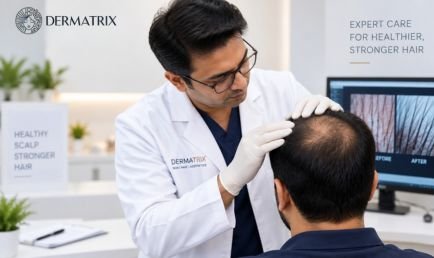
How Can a Hair Specialist at Dermatrix Clinic Help With Hair Fall?
Busting common misconceptions around laser treatments.
Wondering if laser hair removal is permanent or painful? Our experts break down the truths and myths you need to know.
Learn More -
How Is Hair Transplant Cost Calculated in Jalgaon? Grafts, Planning & Procedure Guide
Busting common misconceptions around laser treatments.
Wondering if laser hair removal is permanent or painful? Our experts break down the truths and myths you need to know.
Learn More -

Monsoon Hair Shedding? When to See a Doctor for Hair Loss
Busting common misconceptions around laser treatments.
Wondering if laser hair removal is permanent or painful? Our experts break down the truths and myths you need to know.
Learn More -
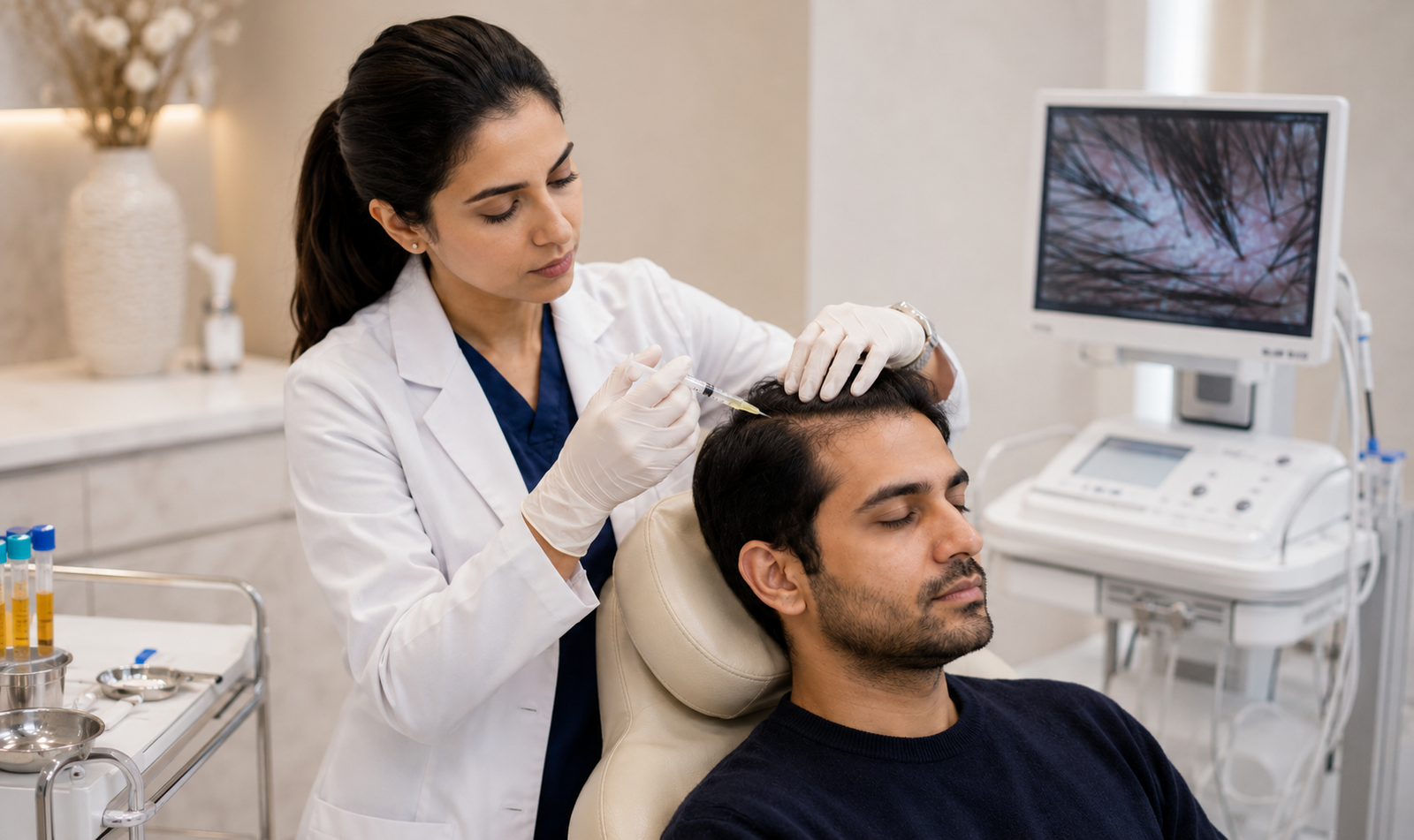
GFC Hair Treatment in Thane: Cost, Benefits, Procedure & Results
Busting common misconceptions around laser treatments.
Wondering if laser hair removal is permanent or painful? Our experts break down the truths and myths you need to know.
Learn More -

PRP for Hair Loss: How It Works, Sessions & Results
Busting common misconceptions around laser treatments.
Wondering if laser hair removal is permanent or painful? Our experts break down the truths and myths you need to know.
Learn More -

Hair Botox Treatment Price
Busting common misconceptions around laser treatments.
Wondering if laser hair removal is permanent or painful? Our experts break down the truths and myths you need to know.
Learn More -

Hair Specialist Doctor in Thane
Busting common misconceptions around laser treatments.
Wondering if laser hair removal is permanent or painful? Our experts break down the truths and myths you need to know.
Learn More -

Laser Comb Therapy: The Truth About Growth Serums
Busting common misconceptions around laser treatments.
Wondering if laser hair removal is permanent or painful? Our experts break down the truths and myths you need to know.
Learn More -

Laser Helmet Therapy: Science-Backed Hair Growth at Home
Busting common misconceptions around laser treatments.
Wondering if laser hair removal is permanent or painful? Our experts break down the truths and myths you need to know.
Learn More -

Stronger, Healthier Hair Starts Here: Advanced Hair Treatments That Work
Busting common misconceptions around laser treatments.
Wondering if laser hair removal is permanent or painful? Our experts break down the truths and myths you need to know.
Learn More
 Contact us
 Book Appointment
