

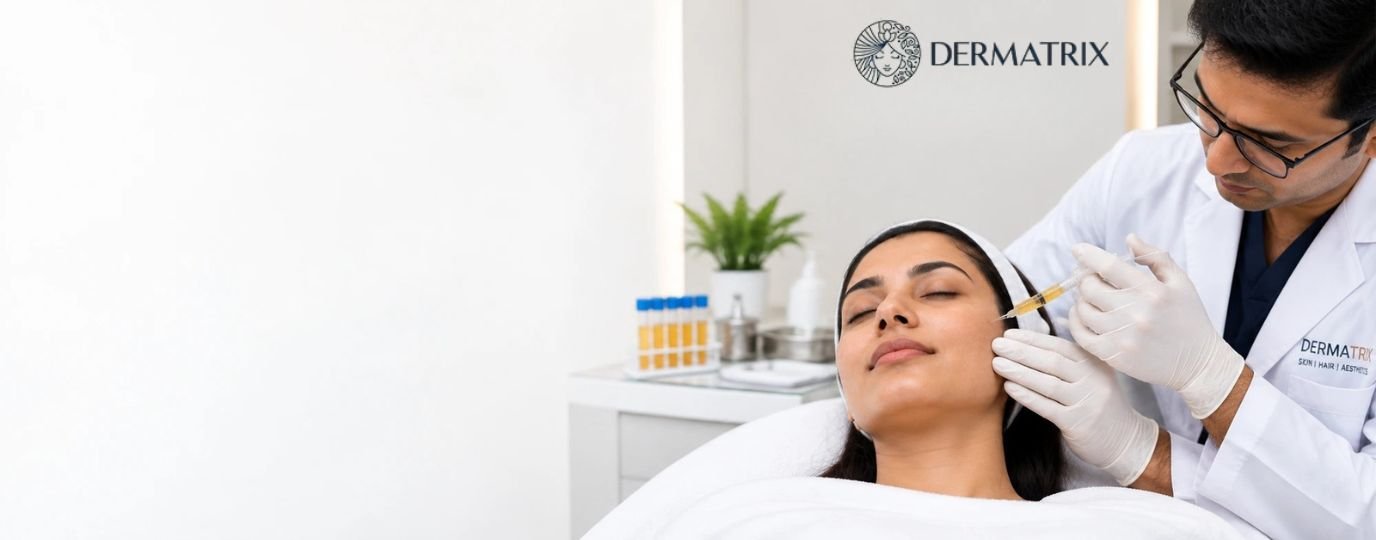
PRP treatment for face in Thane is increasingly considered by people looking for a non-surgical approach to facial rejuvenation. PRP, or Platelet-Rich Plasma, is prepared from a small sample of the patient's own blood and contains platelets and growth factors involved in normal tissue-repair processes. Research has reported possible improvements in areas such as skin texture, wrinkles, hydration and luminosity, although results differ between patients and the available evidence is still developing.
At Dermatrix Clinic, PRP facial treatment begins with an assessment rather than assuming the same procedure is right for everyone. Your skin quality, concerns, previous treatments and expected results are considered before a personalised treatment plan is recommended.
What Is PRP Treatment for Face?
Skin changes gradually because of age, sun exposure, environmental factors, stress and lifestyle. Over time, some people notice dull-looking skin, uneven texture, fine lines, reduced firmness or changes in overall skin quality.
While good skincare and sun protection remain important, professional aesthetic treatments may be considered when patients want additional skin-rejuvenation options.
PRP differs from a regular facial because it is a medical aesthetic procedure rather than a surface-level cleansing or hydration treatment. The platelet-rich portion of the patient's blood is prepared and used according to an individual treatment protocol. Because PRP treatment techniques and study results vary, realistic expectations are important.
What Is PRP Treatment for Face?
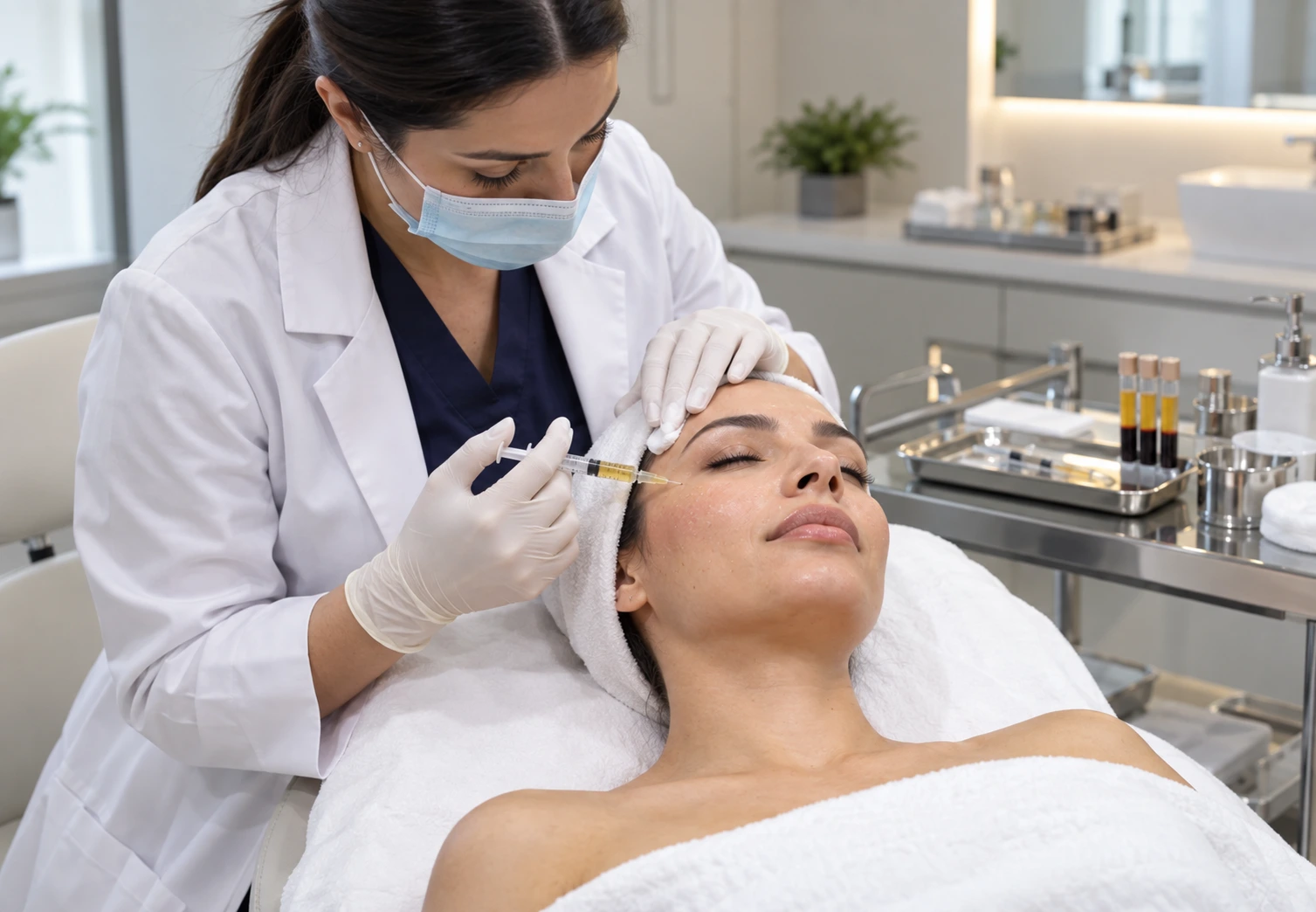
PRP treatment begins with a small blood sample, which is processed to separate platelet-rich plasma. The prepared PRP is then applied or injected into selected facial areas to support natural skin rejuvenation. The procedure is planned according to your skin concerns and treatment goals.
How Does PRP Facial Treatment Work?
PRP facial treatment normally begins with consultation and skin assessment. Your doctor or aesthetic expert may discuss your medical history, previous procedures, current skincare routine and the concerns you want to improve.
A small sample of blood is then collected and placed in a centrifuge to separate the platelet-rich component. The prepared PRP is used on appropriate areas of the face according to the selected treatment method.
PRP has most commonly been studied using injections, although preparation methods, doses and treatment schedules vary considerably across published research. This variation is one reason the number of sessions and expected outcome should be discussed individually.
Temporary redness, swelling, tenderness or minor bruising may occur after injection-based treatment. Published reviews have generally reported mainly mild and temporary adverse effects, but suitability still needs to be assessed professionally.
Benefits of PRP Treatment for Face
PRP facial treatment may be suitable for adults concerned about dull skin, uneven texture, early fine lines or overall skin rejuvenation. At Dermatrix Clinic, our experts assess your skin first to determine whether PRP is the right option for you.
Who Can Consider PRP Facial Treatment?
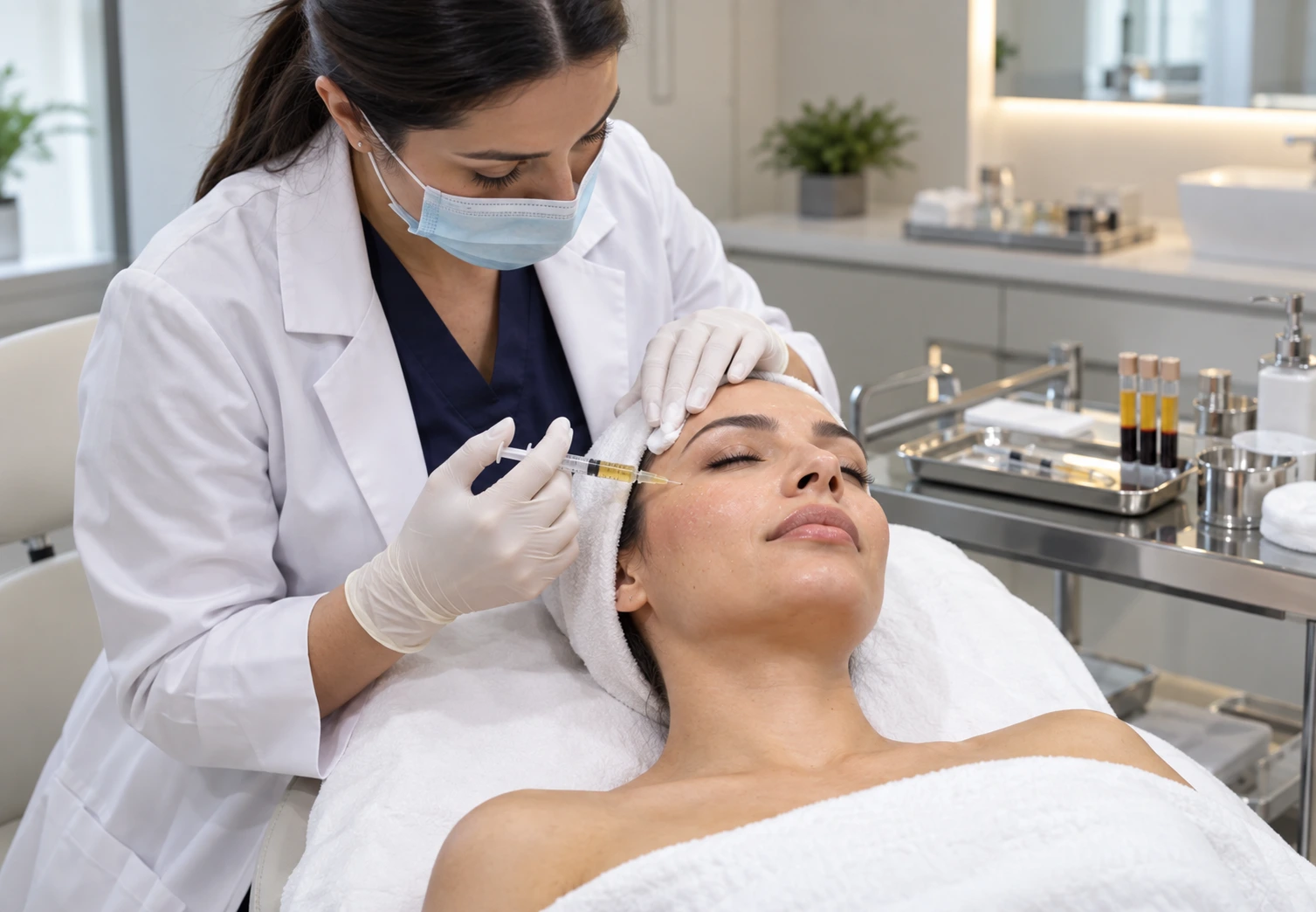
The main appeal of PRP is that it uses a component prepared from the patient's own blood and is performed as a non-surgical aesthetic procedure. Clinical studies have reported possible improvements in skin texture, wrinkles, hydration, luminosity and overall skin quality, but results are not identical for every patient.
PRP also tends to produce gradual changes rather than an artificial or dramatically altered facial appearance. Patients seeking subtle rejuvenation may therefore consider it after professional assessment. Because treatment protocols vary and current scientific evidence is still developing, the expected benefits, number of sessions and suitability should be discussed individually with the treating expert rather than assuming guaranteed results.
PRP Treatment for Face Cost in Thane
PRP treatment cost in Thane can vary according to the patient's skin requirements and treatment plan. There is no single price that applies to every patient.
Factors that may influence the cost include the number of sessions recommended, areas being treated, preparation protocol and whether PRP is performed alone or as part of a combination treatment.
Patients searching for PRP treatment cost near me should consider more than the advertised price. Professional assessment, sterile preparation, clinical hygiene, appropriate treatment technique and aftercare are also important when comparing clinics.
At Dermatrix Clinic in Thane, your skin can first be assessed so that the recommended treatment plan and applicable cost can be explained before you proceed.
How Many PRP Face Sessions Are Required?
PRP facial treatment is designed around gradual skin rejuvenation rather than an instant change in appearance. The response can vary depending on age, baseline skin quality, treatment technique, number of sessions and individual biological response.
Some clinical research has reported improvements in texture, wrinkles, hydration and skin luminosity, but published reviews also emphasize differences between studies and the need for stronger evidence.
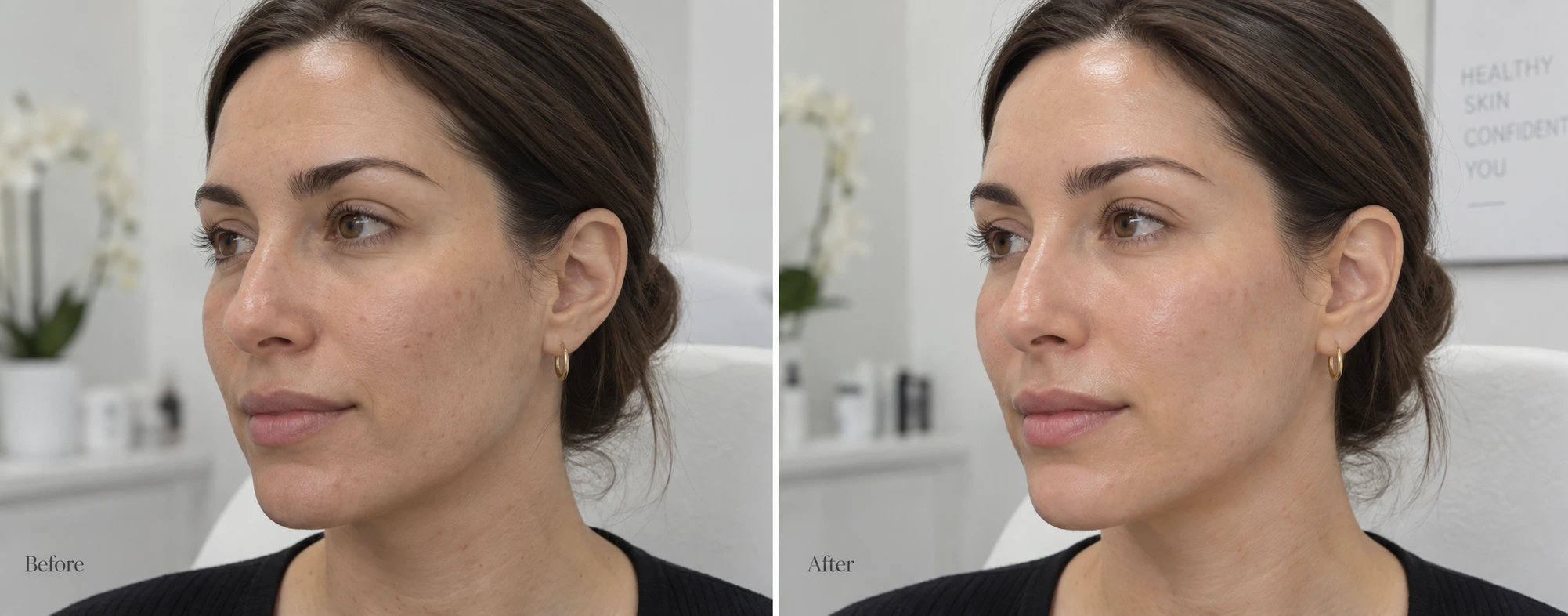
For this reason, before-and-after photographs should be viewed as individual examples rather than a guarantee that every patient will achieve the same result.
Why Choose Dermatrix for PRP Treatment in Thane?
At Dermatrix Clinic, aesthetic care is based on personalised consultation and treatment planning. The expert team evaluates your skin concern, treatment history and expected outcome before recommending PRP or another appropriate skin-rejuvenation option.
Dermatrix is led by Dr. Rajendra Patil, Founder & CEO, Aesthetic Physician, Cosmetologist and Trichologist. Dermatrix states that he has more than 15 years of experience in aesthetics and advanced cosmetic procedures.
Dermatrix has two Thane locations at Manpada and Panch Pakhdi, making consultation accessible for patients from Thane West, Ghodbunder Road and nearby areas.
 Contact us
 Book Appointment
