


Sapphire Hair Transplant At Dermatrix
Precision-Focused Sapphire FUE Hair Restoration
Sapphire Hair Transplant, also called Sapphire FUE, is a hair transplantation technique that uses fine sapphire blades to create recipient-site incisions for placing harvested hair follicles. It combines individual follicular unit harvesting with carefully planned graft placement.
At Dermatrix, hair restoration consultation focuses on understanding your hair-loss pattern, donor hair availability and treatment goals before recommending a suitable approach. Discover how Sapphire FUE works, what makes it different from conventional FUE, and whether it may be appropriate for your hair restoration needs. Book a Hair Transplant Consultation
What Is Sapphire Hair Transplant?
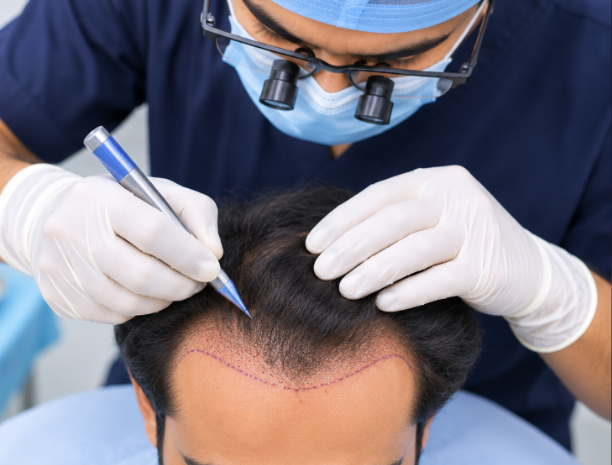
Sapphire Hair Transplant is a variation of Follicular Unit Excision (FUE) hair transplantation in which specialized blades made from synthetic sapphire are used during recipient-site preparation. In FUE hair transplantation, suitable follicular units are individually removed from a donor area, typically at the back or sides of the scalp. These follicles are then transplanted into areas affected by hair loss. The Sapphire FUE technique differs mainly in the instrument used to prepare the recipient area. Instead of a conventional steel blade, the medical team uses a sapphire blade to create small incisions where the grafts will be placed. The size, angle, direction and spacing of these incisions are carefully planned to complement the patient's natural hair growth pattern.
Personalized Sapphire FUE Treatment Planning
Successful hair transplantation requires careful medical evaluation, precise surgical planning and realistic treatment goals.
At Dermatrix, the consultation process emphasizes selecting an appropriate hair restoration technique rather than recommending the same procedure to every patient.

4.8

1000 Verified Reviews
Individual Hair Loss Assessment
Understanding the cause, severity and progression of hair loss helps determine whether surgical restoration may be appropriate.
Donor Hair Evaluation
Healthy donor follicles are essential for transplantation. Donor density, hair characteristics and the number of safely available grafts are important planning considerations.
Recipient-Site Planning
The angle, direction, size and spacing of recipient-site incisions are planned according to the proposed hairline, existing hair and desired coverage.
Technique Suitability Assessment
The medical team considers whether Sapphire FUE, conventional FUE or another transplantation approach is appropriate for the patient's needs.
Recovery and Follow-Up Guidance
Patients receive information about scalp care, expected recovery, possible complications and the gradual development of transplanted hair.
Who Is a Suitable Candidate for Sapphire Hair Transplant?
-
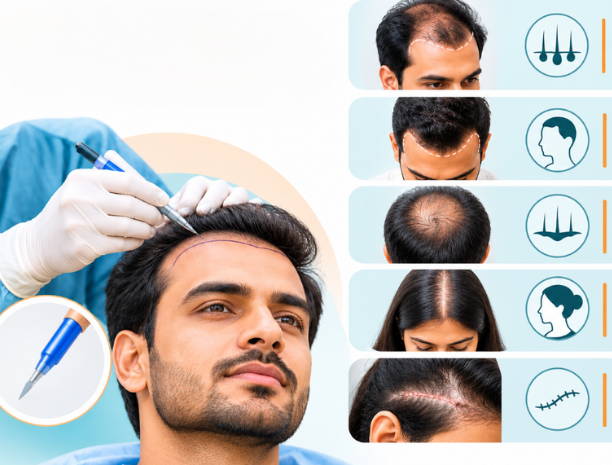
Male Pattern Baldness
Men experiencing androgenetic alopecia, including frontal recession or selected areas of baldness, may be evaluated for Sapphire FUE.
-
Receding Hairline
Patients seeking restoration of a receding frontal hairline may be considered when hair-loss progression, donor availability and long-term hairline planning are suitable
-
Crown Hair Loss
Crown restoration may be possible depending on the extent of thinning, available grafts and the need to preserve donor follicles for future hair loss.
-
Selected Female Hair Loss Cases
Women with localized, stable hair loss may be suitable candidates. Diffuse thinning requires careful diagnosis and donor assessment before transplantation is considered.
-
Localized Permanent Hair Loss
Some stable areas of hair loss caused by previous trauma or scarring may be evaluated for surgical restoration.
When May Sapphire FUE Not Be Suitable?
Sapphire FUE may not be appropriate for patients with insufficient donor hair, certain active scalp disorders, unstable hair-loss conditions or medical factors that increase surgical risk.
The blade used during transplantation does not change the underlying requirements for safe patient selection. A qualified medical consultation is necessary before deciding whether Sapphire FUE is suitable.
How Does the Sapphire Hair Transplant Procedure Work?
Sapphire FUE involves several stages, from the initial scalp evaluation to individual graft placement and post-procedure care
Step 1: Consultation and Donor Assessment
The process begins with an assessment of the patient's hair-loss pattern, scalp health, donor area and medical history. The clinician evaluates whether hair transplantation is appropriate and discusses realistic treatment expectations.
Step 2: Hairline and Recipient Area Planning
The intended restoration area is mapped according to facial proportions, natural hair direction, existing density and donor hair availability. The medical team estimates the graft requirement.
Step 3: Local Anaesthesia and FUE Extraction
Local anaesthesia is commonly used during the procedure. Individual follicular units are harvested from the donor area using FUE instruments designed for follicle excision.
Step 4: Sapphire Blade Incision Creation
This is the defining stage of Sapphire FUE. The treating surgeon uses appropriately selected sapphire blades to create recipient-site incisions in the planned restoration area. Incision angle, direction, depth and spacing are determined according to the hair restoration plan.
Step 5: Hair Graft Placement
The extracted follicular units are carefully placed into the prepared recipient sites. Appropriate handling helps protect the grafts during transplantation.
Step 6: Post-Procedure Care
After treatment, patients receive instructions for scalp washing, protection of the transplanted grafts, activity restrictions and follow-up. Temporary redness, swelling, crusting or sensitivity may occur during early recovery. Hair growth develops gradually over the following months.
What Is the Difference Between Sapphire and Conventional FUE?
Both Sapphire FUE and traditional FUE involve harvesting individual follicular units from an appropriate donor area. The key difference is the instrument used to create the recipient sites.
Conventional FUE
Conventional FUE commonly uses steel microblades, needles or other suitable instruments to prepare recipient sites for graft implantation.
Sapphire FUE
Sapphire FUE uses synthetic sapphire blades to prepare recipient-site incisions. These blades are available in specialized shapes and sizes that may be selected according to the surgeon's planned incision technique.
Is Sapphire FUE Better Than Traditional FUE?
Sapphire FUE is sometimes promoted as a more advanced technique. However, blade material alone does not establish superior hair density, faster healing or improved graft survival for every patient.
The factors that matter most include appropriate patient selection, donor hair quality and preservation, surgical skill and technique, correct recipient-site planning, careful graft handling, and individual scalp healing and aftercare.
Both approaches can be suitable when performed using appropriate surgical methods. The choice should be made following medical assessment rather than based only on the technique's name.
What Are the Potential Advantages of Sapphire FUE?
Precise Recipient-Site Planning
Specialized sapphire blades can be selected for creating recipient-site incisions according to the planned depth, angle and distribution.
Natural Hair Direction Planning
The surgeon can plan graft orientation to complement the direction of surrounding hair, supporting natural-looking restoration goals.
Individualized Graft Distribution
The location and spacing of recipient sites can be tailored to the patient's existing hair, restoration area and available donor grafts.
FUE-Based Donor Harvesting
Sapphire FUE generally uses individual follicular unit excision, avoiding the long linear donor incision associated with traditional strip harvesting. Small donor-area scars may still occur.
Long-Term Restoration Potential
Appropriately selected transplanted follicles may continue producing hair over the long term, although individual outcomes vary and non-transplanted hair may continue to thin.
Understanding the Limitations
Sapphire blades are one component of the procedure. They do not guarantee scar-free treatment, painless surgery, rapid recovery or a particular level of hair density. The final treatment outcome depends on multiple medical and technical factors.
What to Expect After Sapphire FUE Hair Transplant
First Week: Initial Healing
Temporary redness, swelling, mild discomfort and crusting may occur in the donor and recipient areas. Patients should follow their treating team's instructions for scalp care.
Weeks 2–6: Temporary Shedding
Some transplanted hair shafts may shed during the early weeks after surgery. This can be part of the normal transplantation process.
Months 3–6: Early Hair Growth
New growth may begin appearing over the following months. Initial hair can look fine or uneven as follicles progress through their growth cycles.
Months 6–12: Gradual Improvement
Hair coverage and appearance may become more noticeable as transplanted follicles continue producing hair.
Months 12–18: Continued Maturation
Some patients experience further improvement over a longer period, particularly following crown transplantation.
Recovery and growth timelines vary. They should not be interpreted as guaranteed results. Patients should attend recommended follow-up appointments and seek medical guidance for unexpected symptoms
What Determines the Cost of Sapphire FUE?
Sapphire Hair Transplant cost depends on the individual treatment plan rather than a single standard price.
Important considerations include the estimated number of grafts, the size of the restoration area, donor hair characteristics, recipient-site requirements, surgical complexity and services included in the treatment plan. The choice of surgical technique may also influence the final quotation.
Because every patient's hair-loss pattern and graft requirement are different, a consultation is recommended before making treatment decisions based on price.
For detailed location-based pricing guidance, explore our Hair Transplant Cost in Thane page.
Explore Your Hair Restoration Options At Dermatrix
Hair Transplant Treatment
Understand the complete hair transplantation process, including donor assessment, hairline design and surgical treatment planning.
Explore Hair Transplant Treatment
Hair Loss Treatment
Not every patient experiencing hair thinning requires surgery. Explore diagnosis-led options for managing different patterns of hair loss.
Hair Transplant Consultation in Thane
Find location-specific information about hair transplantation consultations, treatment planning and available restoration options.
Sapphire Hair Transplant – FAQs
-
What is Sapphire FUE Hair Transplant?
Sapphire FUE is a variation of FUE hair transplantation that uses sapphire blades to create recipient-site incisions for placing harvested hair follicles. The donor follicles are still collected using the FUE method.
-
What is the difference between Sapphire FUE and traditional FUE?
Both techniques use individual follicular unit harvesting. Sapphire FUE uses synthetic sapphire blades for recipient-site creation, while conventional FUE may use steel blades or other instruments.
-
Does Sapphire FUE provide better results?
Not necessarily. There is insufficient evidence to conclude that sapphire blades consistently produce better outcomes for every patient. Results depend on clinical assessment, surgical planning, graft quality and other factors.
-
Does Sapphire Hair Transplant cause scarring?
Small scars can occur at individual donor extraction sites. Sapphire blades do not eliminate the possibility of scarring, and healing varies between patients.
-
Is Sapphire FUE a permanent hair transplant?
Transplanted follicles from suitable donor regions may produce long-lasting hair growth. However, existing non-transplanted hair can continue thinning, and individual results vary.
-
Can Sapphire FUE be used for hairline restoration?
Sapphire FUE may be considered for suitable hairline restoration cases. The technique selected depends on hairline goals, donor availability and the surgeon's evaluation.
-
Can Sapphire Hair Transplant treat crown baldness?
Some patients with crown hair loss may be candidates for transplantation. Suitability depends on crown size, donor capacity and the overall restoration priorities.
-
Does Sapphire FUE heal faster than traditional FUE?
Faster healing should not be assumed solely because sapphire blades are used. Recovery depends on the surgical technique, incision characteristics, individual healing and aftercare.
-
How much does Sapphire Hair Transplant cost?
The cost depends on the graft requirement, treatment area, surgical plan and included services. A personalized quotation requires evaluation of the scalp and donor area.
-
Is Sapphire FUE suitable for everyone?
No. Patients with inadequate donor hair, certain medical conditions or unsuitable patterns of hair loss may not be good candidates. An individual medical assessment is essential.
-
How long does Sapphire FUE take?
Procedure duration varies depending on the number of grafts, the extraction and placement process, and individual surgical requirements. The treatment team can provide an estimate after planning.
-
When will new hair grow after Sapphire FUE?
Early new hair growth may become visible after several months. Many patients notice improvement within 6–9 months, while final maturation may take 10–18 months. Timelines vary.
-
Can women undergo Sapphire FUE?
Selected women may be suitable candidates if they have sufficient donor hair and an appropriate pattern of permanent hair loss. Women with diffuse thinning may require additional investigations.
-
What are the possible risks of Sapphire FUE?
Possible risks include infection, bleeding, swelling, scarring, temporary shedding, poor graft growth, uneven density or an unsatisfactory cosmetic result. A consultation should explain the relevant benefits, limitations and risks.
-
How can I enquire about Sapphire FUE at Dermatrix?
You can contact Dermatrix for a hair restoration consultation. The team can assess your hair-loss concerns, discuss appropriate treatment options and confirm whether Sapphire FUE is available at the selected clinic.
 Contact us
 Book Appointment
